

Jiaozi Dumplings with Sweet Soy Sauce + Rosy Coconut-Cranberry Refresher

Jiaozi Dumplings with Sweet Soy Sauce
"Jiaozi" (JYOW-dzuh) are Chinese dumplings. The word means "dumpling" in Mandarin Chinese. A Chinese physician created them back in the Eastern Han Dynasty (25-220 CE), adding them to a warming broth to help heal frostbitten ears, so they earned the nickname "tender ears."
This recipe is everything I love about preparing and eating food with kids. It brings together food, fun, family, tradition, and history wrapped up into one adorable little dumpling that you can dip into a sweet soy sauce.
Happy & Healthy Cooking,
Shopping List
- FRESH
- 1/4 lb firm tofu **(see allergy subs below)**
- 2 garlic cloves
- 1/4 lb mushrooms (button mushrooms work great)
- 1 handful bean sprouts, optional
- 2 inch fresh ginger root
- 1 large carrot
- PANTRY
- 1 C all-purpose flour **(see allergy subs below)**
- 5 1/2 tsp vegetable oil **
- 1 big pinch salt
- 5 T soy sauce **(see allergy subs below)**
- 2 T cornstarch
- 1 T rice vinegar
- 1/4 C + 1 tsp honey, agave syrup, or sugar + more to taste
- 1 13.5-oz can coconut milk
- 1 2/3 C cranberry juice (approximate – use same amount as coconut milk)
- HAVE ON HAND
- 1 C water
- 3 C ice
Fun-Da-Mentals Kitchen Skills
- blend :
to stir together two or more ingredients until just combined; blending is a gentler process than mixing.
- chop :
to cut something into small, rough pieces using a blade.
- drizzle :
to trickle a thin stream of a liquid ingredient, like icing or sauce, over food.
- grate :
to reduce food, like a carrot, to very small shreds or pieces of the same size by rubbing it on a tool with an outside surface that has holes with cutting edges (a grater).
- knead :
to work dough by pushing, pulling, and folding it by hand or with a stand mixer.
- knife skills :
Bear Claw (growl), Pinch, Plank, and Bridge (look out for trolls) and Rock and Saw.
- pour :
to cause liquid, granules, or powder to stream from one container into another.
- rest (dough) :
to let bread or pastry dough relax, allowing the dough to absorb more liquid and become more pliable before shaping it.
- whisk :
to beat or stir ingredients vigorously with a fork or whisk to mix, blend, or incorporate air.
Equipment Checklist
- Skillet + lid
- Mixing bowls
- Dry measuring cups
- Liquid measuring cup
- Measuring spoons
- Clean, damp dish towel or paper towels
- Cutting board
- Kid-safe knife
- Grater
- Whisk
- Blender (or pitcher + immersion blender)
- Can opener
Ingredients
Jiaozi Dumplings with Sweet Soy Sauce
- 1 tsp (roughly) vegetable oil ** for frying
- 1/2 C water for steaming
- Dough:
- 1 C all-purpose flour **(for CELIAC/GLUTEN ALLERGY sub 1 C gluten-free/nut-free all-purpose flour)**
- 1/2 C warm water
- 1 tsp vegetable oil **
- 1 big pinch salt
- Filling:
- 1/4 lb firm tofu **(for SOY ALLERGY sub 1 C shredded cabbage)**
- 1 garlic clove
- 1/4 lb mushrooms (button mushrooms work great)
- 1 handful bean sprouts, optional
- 2 T grated fresh ginger
- 1 large carrot
- 2 T soy sauce **(for CELIAC/GLUTEN/SOY ALLERGY sub 2 T coconut aminos)**
- 2 tsp vegetable oil **
- 2 T cornstarch
- Sauce:
- 1/2 tsp grated fresh ginger
- 1/2 tsp grated garlic
- 1/2 tsp grated carrot
- 3 T soy sauce **(for CELIAC/GLUTEN/SOY ALLERGY sub 3 T coconut aminos)**
- 1 T rice vinegar
- 1 tsp honey, agave syrup, or sugar
- 1 1/2 tsp vegetable oil **
Rosy Coconut-Cranberry Refresher
- 1 13.5-oz can coconut milk
- 1 2/3 C cranberry juice (approximate – use same amount as coconut milk)
- 1/4 C honey, agave syrup, or sugar to taste
- 3 C ice
Food Allergen Substitutions
Jiaozi Dumplings with Sweet Soy Sauce
- Celiac/Gluten/Wheat: For 1 C all-purpose flour, substitute 1 C gluten-free/nut-free all-purpose flour.
- Soy: Substitute canola oil or other nut-free oil for vegetable oil. For 1/4 lb firm tofu, substitute 1 C shredded cabbage.
- Celiac/Gluten/Soy: Substitute coconut aminos for soy sauce.
Instructions
Jiaozi Dumplings with Sweet Soy Sauce
mix + knead + rest
Let’s start with the dumpling dough! In a large bowl, have your kids measure and mix 1 cup flour, 1/2 cup warm water, 1 teaspoon vegetable oil, and 1 big pinch of salt until the dough comes together. With clean hands, have them knead the dough on a floured surface until smooth. Cover the dough with a clean, damp towel while you let it rest for 15 minutes.
chop + grate
While the dough takes a nap, let's make the filling! Have kids chop 1/4 pound firm tofu, 1 garlic clove, 1/4 pound mushrooms, and optional 1 handful of bean sprouts. Grate 2 tablespoons fresh ginger and 1 large carrot, add to the mushroom mixture, and set aside.
pour + sprinkle
Have your kids measure and pour 2 tablespoons soy sauce and 2 teaspoons vegetable oil over the mushroom mixture. Then, have them measure and sprinkle 2 tablespoons of cornstarch over the mushrooms and toss together well.
roll + shape
With clean hands, have the kids roll the dough into long cylinders about 1 1/2 inches thick and cut the cylinders into 1/2-inch pieces. Next, have them flatten the pieces with the palm of their hand, forming disks. Roll out each disk to about a 2-inch diameter circle. They will be a bit thick. That's okay! Place a small spoonful of the filling in the center of the wrapper, fold the two sides over the center and have kids pinch the edges to seal the filling in.
frying safety
Make sure always to have your skillet lid nearby. Smoke and splatter are hazardous and need to be treated with care. As soon as you finish using the fryer oil, remove the skillet from the heat to ensure it cools as quickly as possible.
fry + steam
To fry dumplings, adults heat roughly 1 teaspoon vegetable oil in your skillet over medium-high heat, add the dumplings, and fry until their bottoms are golden brown, about 2 to 3 minutes. Then, carefully add 1/2 cup of water, cover, and steam until the water has disappeared, about 3 to 5 minutes. Uncover and cook for another 2 minutes over medium-low heat.
scrumptious science
Frying is a cooking method that relies on the principles of heat transfer and chemical reactions to cook food. When food is submerged in hot oil, the high temperature causes water to evaporate rapidly, creating steam and forming a crust. This process and the Maillard reaction (a chemical process that occurs when food is heated, causing browning and development of complex flavors) contribute to the characteristic crispiness and flavor of fried foods.
grate + mix + whisk
Sweet Soy Sauce time! While you cook the dumplings, have your kids grate 1/2 teaspoon fresh ginger, 1/2 teaspoon garlic, and 1/2 teaspoon carrot and add to a small bowl. Add 3 tablespoons soy sauce, 1 tablespoon rice vinegar, 1 teaspoon honey, and 1 1/2 teaspoons vegetable oil, then whisk everything together. "Chī hǎo hē hǎo" (Chuh how huh how) or "Enjoy your meal" in Chinese!
Rosy Coconut-Cranberry Refresher
pour + drizzle + blend
Pour 1 can of coconut milk plus an equal portion of cranberry juice, about 1 2/3 cups, into your blender (or pitcher for use with an immersion blender). Drizzle in 1/4 cup of honey and add 3 cups of ice to the blender. Blend until smooth, taste, and add more honey if needed, then blend some more. "Ganbei" (Gahn bay) or "Cheers" in Chinese!

Hi! I'm Toady! I'm a Mushroom!
“I'm also a fun guy! Get it? Fun guy—fungi? I'm good in salads, sandwiches, soups, stews, on pizza, with pasta, and stuffed with other yummy foods. Plus, you can cook and use me in recipes just like you would meat!"
History
- The first mushrooms were thought to be cultivated in Southeast Asia, but it is not known why for sure. Perhaps someone discovered that mushrooms grew by accident and sought out a growing method.
- All mushrooms are fungi, but not all fungi are mushrooms! There are an estimated 1.5 to 2 million species of fungi on planet Earth, of which only 80,000 have been properly identified. There are over 250 kinds of mushrooms that people eat.
- Mushrooms are a kind of fungus that look like umbrellas! They grow in places like yards, forests, fields, and gardens.
- What is a fungus? It's a kind of living organism that is different from plants. In fact, mushrooms are more like humans than plants!
- Fungi walls are made of a fibrous substance called "chitin," rather than cellulose, like plants. Also, plants produce their own energy from the sun from photosynthesis, but mushrooms and other fungi don't need the sun for energy!
- Many fungi eat by breaking down dead plants. However, other fungi feast on dead animals, bird droppings, manure, wallpaper paste, fruit, and living animals. So fungi are like nature's cleanup crew!
- The yeast that makes bread rise is a type of fungi.
- Mushrooms are sometimes called Toadstools! Can you picture a toad sitting on top of a giant mushroom?
- Some mushrooms are good to eat, like portobellos, crimini, and shiitakes, while others are extremely poisonous. Never eat a mushroom you find growing outside unless you are with a mushroom expert!
- The Honey Mushroom in the Blue Mountains of Oregon is the world's largest living thing. It is actually a mushroom colony and is believed to be at least 2,000 years old! It covers almost four square miles!
- Some mushrooms live entirely underwater.
- In the Amazon rainforest, mushrooms release spores into the air, which creates the surface for water to condense and can trigger rain. The rain then causes more fungi to grow.
- Before the invention of colorful synthetic dyes, people used mushrooms for dyeing wool and other natural fibers.
- Greek warriors ate mushrooms to increase their strength before battle.
- Mushrooms are one of the vegetable world's substitutes for meat.
Anatomy & Etymology
- The largest mushroom you'll find in most grocery stores is the portobello. It is the fully grown version of the Agaricus Bisporus species and has a large, brown cap. Smaller, immature mushrooms may be brown, like the cremini, or white, like the button.
- Mushrooms contain more than 90 percent water!
- Some mushrooms glow in the dark! They produce light through a process called bioluminescence. People used to carry these in ancient times to light their way through the forest.
- Mushrooms can grow super fast. Once they break through the surface of whatever they're growing on, they can double their size in just one day.
- The word "mushroom" comes from late Middle English for any fungus with a fleshy and fruiting body. It is derived from the Old French "mousseron," from the late Latin "mussirio."
How to Pick, Buy, & Eat
- Wild mushrooms can be found in many wooded areas. If you choose to harvest wild mushrooms, make certain you have a professional identify your pick. Many mushrooms may resemble safe mushrooms but are actually poisonous!
- Buy mushrooms with whole, intact caps, and be sure they are not wet or slimy!
- They will smell strong, sweet, and earthy when fresh.
- Rinse mushrooms before you slice or cut them. Whole mushrooms won't absorb much water, while cut mushrooms will. Wait to rinse mushrooms until right before you cook them; otherwise, they'll turn slimy.
- Mushrooms can be broiled, sautéed, and grilled. Mushrooms can be chopped or sliced and added to other dishes. Portobello caps are large enough to eat like a hamburger on a bun!
- The mushroom cap is most often the part that is cooked and eaten. The stem can be fibrous and woody but will add flavor to vegetable or meat stock.
- Mushrooms pair well with balsamic vinegar, fresh herbs (like oregano, rosemary, thyme, and cilantro), marinara, spinach, leafy greens, tomatoes, goat cheese, mozzarella, cream-based sauces, garlic, and onions.
- Store mushrooms in a partially closed resealable plastic bag to ensure air circulation without drying out the mushrooms.
Nutrition
- Mushrooms are low in calories and are an excellent source of B vitamins. These vitamins are needed for healthy cell and brain function, and they help prevent cancer and stress.
- Even though mushrooms don't use the sun for energy, they use it to produce vitamin D, just like humans do! Vitamin D is essential to our bones! It keeps them strong and regenerating.
- Mushrooms have essential minerals such as selenium, copper, phosphorus, zinc, and potassium. Copper helps the body build red blood cells and is necessary for the health of our bones. Selenium is an antioxidant that may decrease cancer risk.
- Mushrooms have been used successfully in traditional Chinese medicine for thousands of years to treat many health conditions. Western medicine is finally beginning to recognize and utilize some of the medicine mushrooms naturally contain.
What are "Jiaozi"?

- "Jiaozi" (JYOW-dzuh) are Chinese dumplings filled with ground meat or vegetables. They may be cooked by boiling, steaming, baking, pan-frying, or deep-frying. Gyōza (GYOH-zuh) are a Japanese version of jiaozi.
- The word "jiaozi" means "dumpling" in Mandarin Chinese. They are believed to have originated with Zhang Zhongjing, a Chinese physician and inventor during the Eastern Han Dynasty (25-220 CE). He made a hot broth and boiled dough wrappers filled with chopped stewed lamb and seasonings in it to treat people with frostbitten ears, prompting the name "tender ears" for the dumplings.
- Jiaozi is a popular dish for the Chinese New Year. They may be filled with meat, like beef, chicken, fish, pork, and shrimp. Or, they may be filled with vegetables, like cabbage, carrot, celery, green onion, mushroom, or spinach.
- You can add the dumplings to a broth or dip them in a simple soy sauce or some combination of soy sauce, black vinegar, sesame oil, scallions, garlic, and chili oil.
Let's Learn About China!
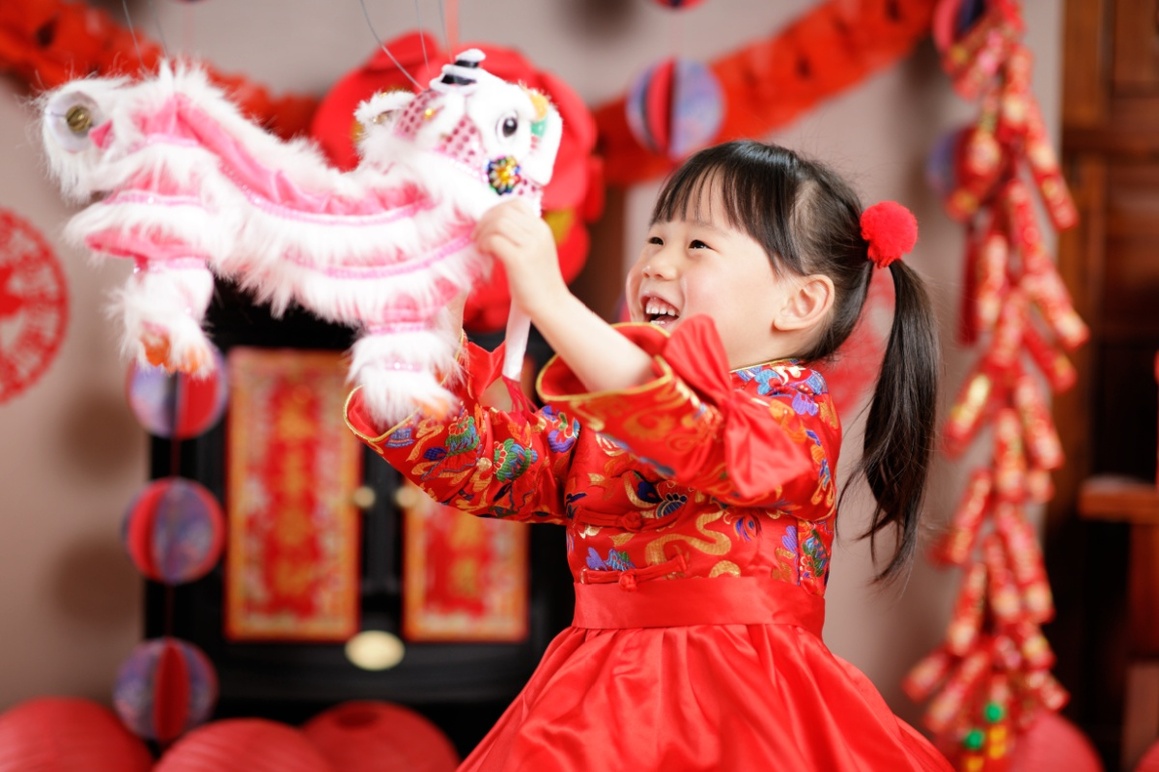
- China's official name is The People's Republic of China. It became a republic in 1912; however, the first Chinese dynasty appeared around 2100 BCE. China is one of the largest countries in the world, and it has the most people!
- The official language of China is Mandarin. However, various dialects are spoken in different regions of the country. For example, in Shanghai, they speak Shanghainese.
- China is around the same size as the continental United States but only has one official time zone. The continental US has four.
- China's capital city is Beijing, while the most populated city is Shanghai.
- The Great Wall in China is the largest man-made construction on Earth, stretching an incredible 5,500 miles. Its builders used mortar that included sticky rice to bind the Great Wall's stones!
- China's land is diverse, with high mountains, low coastal lands, deserts, and damp tropical areas. Just like the United States!
- The Chinese are known for their papermaking, porcelain, and silk cloth. In addition to paper, they also invented the compass during the Han dynasty (202 BCE to 220 CE), woodblock printing in the Tang dynasty (by 7th century), gunpowder in the Tang dynasty (9th century), and movable type made of porcelain (for printing) between 1039 and 1048 CE, during the Song dynasty.
- Chinese cuisine varies by region. Climate, local agriculture, ethnic and class backgrounds, and outside influences all contribute to China's food diversity. There are eight major regional Chinese cuisines: Anhui, Cantonese, Fujian, Hunan, Jiangsu, Shandong, Szechuan, and Zhejiang.
- Wheat is farmed in northern China, so noodles and other foods made from wheat are consumed more in the North. On the other hand, rice is cultivated in southern China; therefore, rice is a staple in the South.
- Tea has long been part of Chinese culture across all parts of society. China was the first country to grow and drink tea and, today, it exports the most green tea worldwide.
What's It Like to Be a Kid in China?
- School success is greatly emphasized in China. Chinese kids go to school five days a week (six days before 1995), and their school day runs from 7:30 or 8 am until 4 or 5 pm. After school, they might do homework for three hours.
- In primary school, kids learn the Chinese language, which is made up of about 7,000 characters, not letters. The characters represent words. By the time they finish primary school, they will have learned about 4,000 characters. They will also learn a foreign language, especially English.
- Kids may not have aunts, uncles, or cousins because, at one time, the Chinese government allowed couples to have just one child due to the high population. That later changed to two, and in May 2021, the policy changed again to allow three kids, so now a child may have a sibling or two.
- Some of the holidays that kids celebrate with their families are Chinese New Year, the Dragon Boat Festival, and National Day. National Day is celebrated with fireworks and parades to commemorate the formal proclamation of the People's Republic of China on October 1, 1949.
- Kids enjoy playing ping pong, basketball, volleyball, and badminton. They also play video games and ride their bikes.
- Rice and noodles are staples, and kids may eat these at every meal. They'll eat their food using chopsticks, not forks!


Lettuce Joke Around
How does the scarecrow drink his cranberry juice?
With a straw!
That's Berry Funny
Why did the Fungi leave the party?
There wasn't mushroom to dance!
Lettuce Joke Around
What do you call a baby dump truck?
A dumpling!
THYME for a Laugh
Why did the Mushroom get invited to all the parties?
Because he's a fungi! (fun guy)
That's Berry Funny
How much does a Chinese dumpling weigh?
It weighs wonton!
THYME for a Laugh
My cell phone got wet, so I put it in rice, but I don't think it's working.
The soy sauce just made things worse!
That's Berry Funny
What did one coconut say to the other?
"Got milk?"
The Yolk's On You
Where do intergalactic coconuts grab a drink?
At the Milky Way!
