

Iced Ginger Green Tea Lattes

Iced Ginger Green Tea Lattes
We add the zing of ginger to iced green tea lattes, and blend in some spinach to add fiber, vitamins, minerals, and a pleasant green hue!
Happy & Healthy Cooking,
Fun-Da-Mentals Kitchen Skills
- blend :
to stir together two or more ingredients until just combined; blending is a gentler process than mixing.
- grate :
to reduce food, like a carrot, to very small shreds or pieces of the same size by rubbing it on a tool with an outside surface that has holes with cutting edges (a grater).
- steep :
to soak a food, like tea, in water or other liquid so as to bring out its flavor.
Equipment Checklist
- Blender (or pitcher + immersion blender)
- Liquid measuring cup
- Zester (or grater with small zesting plate/side)
- Measuring spoons
- Dry measuring cups
Ingredients
Iced Ginger Green Tea Lattes
- 2 decaf green tea bags
- 3 C milk **(for DAIRY ALLERGY sub 3 C dairy-free/nut-free milk)**
- 1 inch piece ginger root for 2 tsp grated ginger
- 1/4 C granulated sugar or honey (or 2 stevia packets)
- 1 C ice
- 1 small handful fresh or frozen spinach (to make the lattes green!)
Food Allergen Substitutions
Iced Ginger Green Tea Lattes
- Dairy: For 3 C milk, substitute 3 C dairy-free/nut-free milk.
Instructions
Iced Ginger Green Tea Lattes
steep + pour
Add 2 decaf green tea bags to 3 cups of milk. Steep for at least 30 minutes and then pour the steeped green tea milk to your blender (or pitcher for use with an immersion blender).
grate + measure + add
Grate a 1 inch piece of ginger root. Add 2 teaspoons grated ginger to your blender (or pitcher for use with an immersion blender), along with 1/4 cup sugar or honey, 1 cup ice, and 1 small handful of spinach (to make the lattes green!).
blend + enjoy
Blend the lattes until they are smooth and thick and a layer of foam forms on top!. Cheers in Japanese by shouting "Kanpai" (GAHN-pie)!

Hi! I’m Ginger!
"My name is Ginger, and I'm happy to make your acquaintance! You may have tasted me in lots of sweet foods and drinks, like gingerbread, ginger snap cookies, pumpkin pie, and ginger ale. But, I also add my unique flavor to savory dishes, like stir-fries and potstickers! If you use my fresh rhizome or root in a recipe, delicately peel my beige, papery skin (the back of a metal spoon works great!) and grate my juicy flesh into the food! I also come in a dried and ground form and as crystallized ginger. As a bonus, I might even make your tummy ache feel better!"
History
- Ginger is a native plant of India and China and is a common cooking spice used throughout the world.
- Ginger is one of the oldest plants used for medicine.
- Which spices do you think are most commonly found on kitchen tables around the world? If you said salt and pepper, you'd be right! It truly depends on where you are in the world. In the ninth century, Europeans placed powdered ginger on the table alongside salt and pepper.
- A long, long time ago, ginger was used to preserve food and keep it from getting rotten.
- Greeks used to eat ginger wrapped in bread to treat digestive problems. After a while, they added ginger to bread dough to create the first recipe for gingerbread!
- Ginger grows in many tropical countries, including the Caribbean islands. However, ginger from Jamaica is considered by many to be the best! Do you know where your ginger originated?
- Ginger is also grown in Florida, Hawaii, and along the eastern coast of Texas.
Anatomy & Etymology
- Related to cardamom and turmeric, the ginger plant is part of the Zingiberaceae or Ginger family. We use the "rhizome" part of the plant, which are underground stems. Sometimes we can eat the rhizome part of a plant, and sometimes we can't! For example, bamboo plants are rooted underground by rhizomes, but the rhizome is not the part of the plant we eat—instead, we eat the bamboo shoots that come up out of the ground. But we do eat the rhizomes of plants such as ginger, turmeric, and arrowroot!
- Rhizomes are also the storage compartment of the plant. What do rhizomes store? Starches, proteins, and other nutrients—that's why we eat this part of the plant (because it's nutritious!).
- Ginger Root is characterized by its aroma: it smells strong, sweet, and woodsy. Its skin is not something we eat—we peel the skin to reveal ginger's coarse, stringy, aromatic flesh.
- The ginger plant looks like a reed and has been used in the kitchen and as medicine for the past 5,000 years. A ginger plant can reach three to four feet tall.
- The word "ginger" comes from late Old English "gingifer," from medieval Latin "gingiber," from Greek "zingiberis," and from Pali, a Middle Indo-Aryan language "siṅgivera."
How to Pick, Buy, & Eat
- Fresh ginger is available year-round, where you can find it in the grocery store produce section.
- When selecting fresh ginger, choose robust, firm roots that feel heavy, and have a spicy fragrance and smooth skin.
- Ginger root length is a sign of age, and mature rhizomes will be spicier and more fibrous than younger roots.
- Ginger should not be cracked or withered—these are signs of aged ginger past its prime.
- To store ginger root, wrap it in a paper towel or plastic wrap or put it in a plastic bag before placing it in the refrigerator for two to three weeks. You can also freeze it for up to three months.
- According to many chefs and cooks, fresh ginger is best and can be added to sauces, soups, and stews. Dried and powdered ginger has a more spicy, intense flavor and is often used in baked desserts like gingerbread, gingersnaps, and ginger cake.
- Ginger can be sliced, minced, grated, or left whole to steep in recipes (minced ginger has the most intense flavor). It can also be dried, pickled, crystallized, candied, or preserved.
- Ginger tastes sweet, spicy, and pungent and increases flavor in a range of dishes, from stir-fried beef or tofu to ginger tea.
Nutrition
- Ginger continues to be used to treat nausea and to prevent seasickness.
- Ginger may also have anti-inflammatory properties and increase digestive function.
- Despite its natural properties, any medicinal use of ginger should be discussed with a doctor. Limiting the amount you take will help avoid heartburn. It may also interfere with anticoagulant medicine.
History of Green Tea!
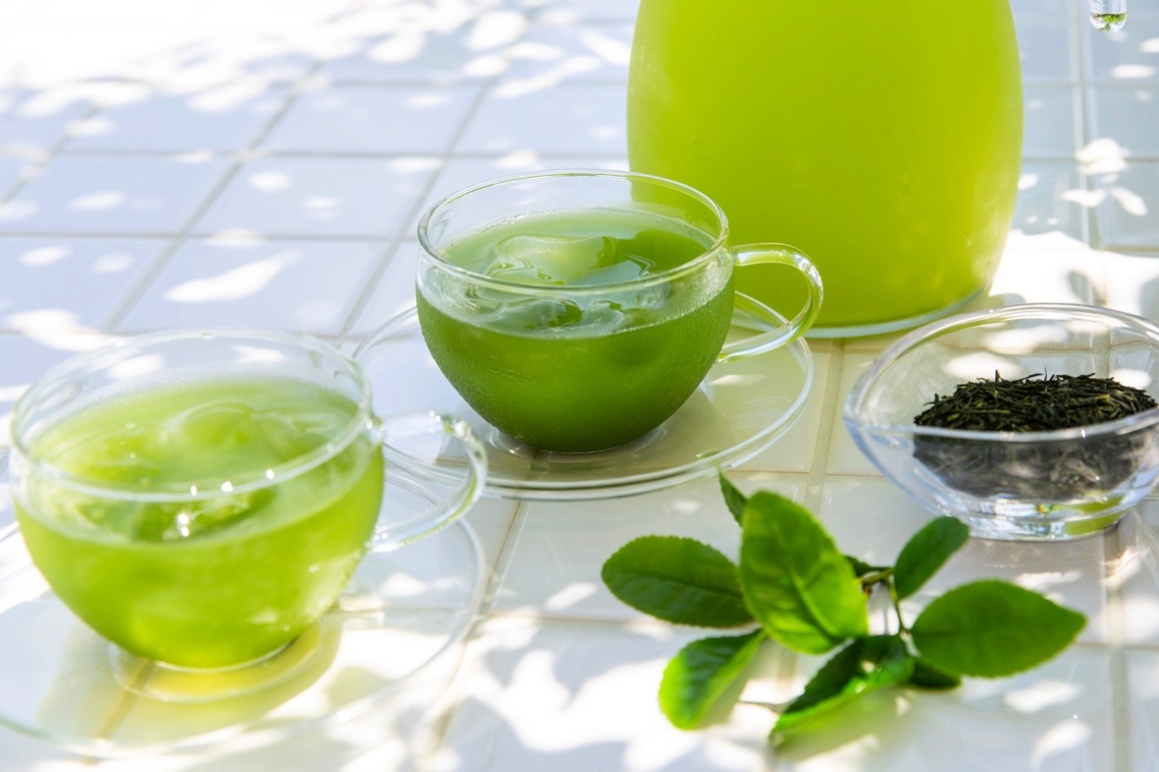
- Tea originated in China thousands of years ago. Lu Yu, a Chinese tea master and writer (733–804 CE), wrote about growing, making, and drinking tea in his book The Classic of Tea. In the Book of Tea, Zen priest Myōan Eisai wrote in 1211 about growing and processing green tea and its effect on five vital organs.
- In his book Green with Milk and Sugar: When Japan Filled America's Teacups, Robert Hellyer, a history professor at Wake Forest University in North Carolina, says colonial Americans in the late 18th century began drinking green tea imported by the British East India Company. In the 19th century, Japanese tea traders supplied the United States with tea, and Hellyer says Midwesterners were drinking the most green tea in the US.
- Green tea is made from the same evergreen plant's leaves used for black and white teas: Camellia sinensis. The difference between the teas is the oxidation process they go through.
- Green tea is partially oxidized due to being treated with steam after harvesting, allowing the leaves to stay green. Black tea is fully oxidized, turning the leaves brown-black. White tea is unprocessed, or oxidation is interrupted sooner than green tea leaves before the young leaves are dried. White tea gets its name from the silvery hairs of the unopened buds of the plant that may still be present before drying.
- Matcha is bright green, finely powdered green tea leaves. Matcha is added to hot water to make tea. It tastes more intense than typical green tea, with an umami flavor (pleasant and savory). It is also described as having an earthy, grassy, and slightly bitter taste.
- An 8-ounce cup of green tea has an average of 35 milligrams of caffeine. A cup of black tea has an average of 55 milligrams.
Let's Learn About Japan!

- Japan is an East Asian island country with more than 6,800 islands! However, there are five main islands: Hokkaido, Honshu (called "Hondo" or "mainland"), Kyushu, Okinawa, and Shikoku.
- The country is governed by a unitary parliamentary constitutional monarchy, with an emperor, a prime minister, and a legislature.
- Japanese is the official language, with English becoming more widespread in business and education.
- Japan lies on the Pacific "Ring of Fire," contributing to its island geography. There are more than 111 active volcanoes, and Japan has the most earthquakes every year. Mount Fuji is the tallest mountain and volcano in Japan at 12,389.2 feet.
- Tokyo is Japan's capital and largest city. Japan's total area is 145,937 square miles, and its population is over 125.5 million.
- The Japanese word for Japan is "Nihon" or "Nippon." The Japanese or "kanji" characters used for its name mean "origin of the sun." This is the source of Japan's nickname, "Land of the Rising Sun." The red circle in the center of the Japanese flag represents the rising sun, or "circle of the sun."
- "Kanji" is a Japanese writing system that uses characters derived from Chinese writing. Each character represents a word or words.
- Ancient warriors of Japan were known as Samurai and were highly skilled swordsmen and fighters.
- Japan's national flower is the cherry blossom. The symbolism of the cherry blossom is abundant in Japan. The cherry blossom tree is also known as the Japanese cherry or "Sakura" (which means "cherry blossoms").
- Haiku poetry originated in Japan. Haiku consists of just three lines, with the first line being 5 syllables, the second line 7 syllables, and the 3rd line 5 syllables.
- Shigeichi Negishi, a Japanese engineer, created the first karaoke-like machine in 1967, using 8-track tapes and booklets for the lyrics. However, he was not successful in distributing his "Sparko Box" machines.
- Then, in the early 1970s, a Japanese musician, Daisuke Inoue, marketed tape machines, taped music, and amplifiers to bars to accompany regular people who wanted to get up on stage and sing, and his karaoke business model took off.
- Japan produces the most robotics globally. The ASIMO is a human-like robot created by Japanese engineers of Honda Motor Company in 2000. The acronym stands for Advanced Step in Innovative Mobility.
- Sumo wrestling is Japan's national sport, and like sumo, other martial arts originated in Japan, including karate, judo, kendo, jujutsu, and aikido. Western sports such as baseball, basketball, and soccer are also popular.
- Since the 8th century, Coming of Age Day has been a holiday to celebrate a young person reaching the age of maturity—20 years old in Japan. Their special day serves to encourage them as they realize their adulthood.
- The Japanese tea ceremony is considered a traditional art in Japan, and some practice it as a hobby to share with family and friends. Tea was brought to Japan from China in the 9th century by a Buddhist monk. It is said that the ritual of drinking green tea began as a way for the monks to keep awake during meditation.
- Japan has about four million vending machines, the highest per capita worldwide. The machines sell everything from hotdogs to underwear and soup to umbrellas!
- In addition to sushi, other Japanese dishes include "soba" (thin buckwheat noodles), "teriyaki" (broiled or grilled seafood or meat with a soy sauce glaze), "tempura" (battered and deep-fried seafood, meat, and veggies), and yakitori (skewered grilled chicken).
- Many kids and adults enjoy bento boxes, which are lunch boxes filled with sushi and other snacks. Bento boxes are an experience with texture, shapes, and flavors!
What's It Like to Be a Kid in Japan?
- Most school children in Japan wear uniforms, and their school breaks are shorter than in other countries.
- Kids have to learn 1,026 basic kanji characters by the time they finish sixth grade.
- Parents and schools teach kids to respect their elders, teachers, and each other.
- Primary school kids eat lunch together in their classrooms. A few students are assigned to get the lunches, serve them to their classmates, and return the dirty dishes to the school kitchen. Every student prepares themselves for lunch by cleaning their desks and washing their hands. In some schools they even put on a lunch uniform—a white garment and hat—to protect their clothes.
- Some of the sports and martial arts kids participate in are baseball, soccer, swimming, judo, kendo, and karate.
- School lunch may consist of rice or noodles, soup, fish or meat, fruit, salad, a cup of tea, and always a bottle or carton of milk.
- Two popular sweet treats kids in Japan like are "mochi," a molded cake made of rice, sugar, cornstarch, and water, sometimes with a sweet red bean filling, and "Pocky," a brand of chocolate-coated biscuit sticks.


That's Berry Funny
What do teapots wear to a tea party?
T-shirts!
The Yolk's On You
What is the noisiest spice?
Ginger Snap!